🎭
Masks and costumes
On Purim people dress up and wear masks — a reminder of the hidden miracle, where rescue came “disguised” as ordinary events.
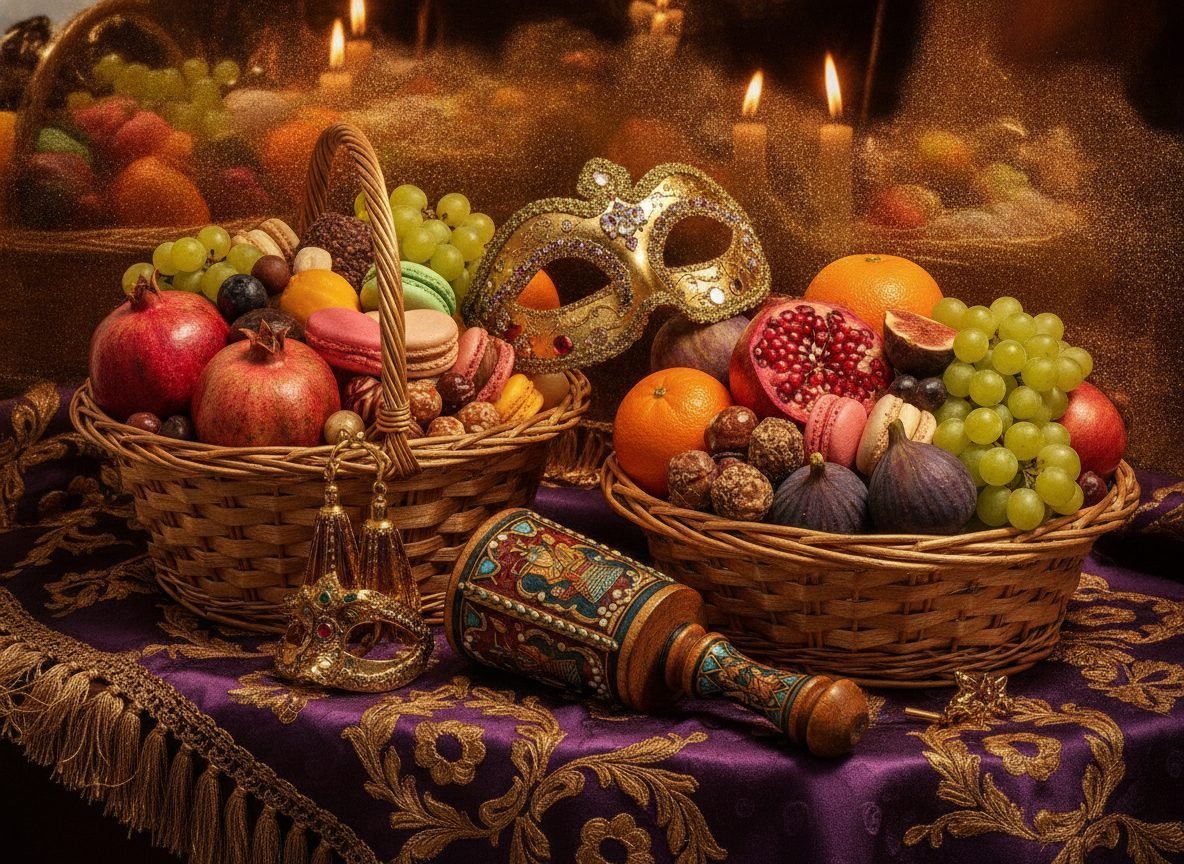
Purim has four mitzvot. Three of them ensure that joy is not solitary: it is shared with friends and with those in need.
The Scroll of Esther is read aloud twice — evening and morning. Everyone should hear the whole story of rescue, from beginning to end.
Gifts are sent to friends — at least two ready foods or treats. Thus the joy becomes shared and bonds between people grow stronger.
Matanot la'evyonim: on this day one must help those in need — at least two of them — so that everyone can celebrate.
Seudat Purim — a great daytime feast with wine, song and merriment among family and friends.
Purim is the day the usual order is overturned. The hidden is revealed, the solemn becomes funny, and anyone can be someone else for a while.
On Purim people dress up and wear masks — a reminder of the hidden miracle, where rescue came “disguised” as ordinary events.
Whenever Haman's name sounds during the Megillah reading, children and adults rattle graggers and stamp their feet — “blotting out” the villain's name.
“And it was reversed” — the spirit of the day. Purimshpiels, jokes, disguises: on Purim solemnity gives way to joy.

“Ad de-lo yada” — to rejoice until one can no longer tell “cursed is Haman” from “blessed is Mordechai.”