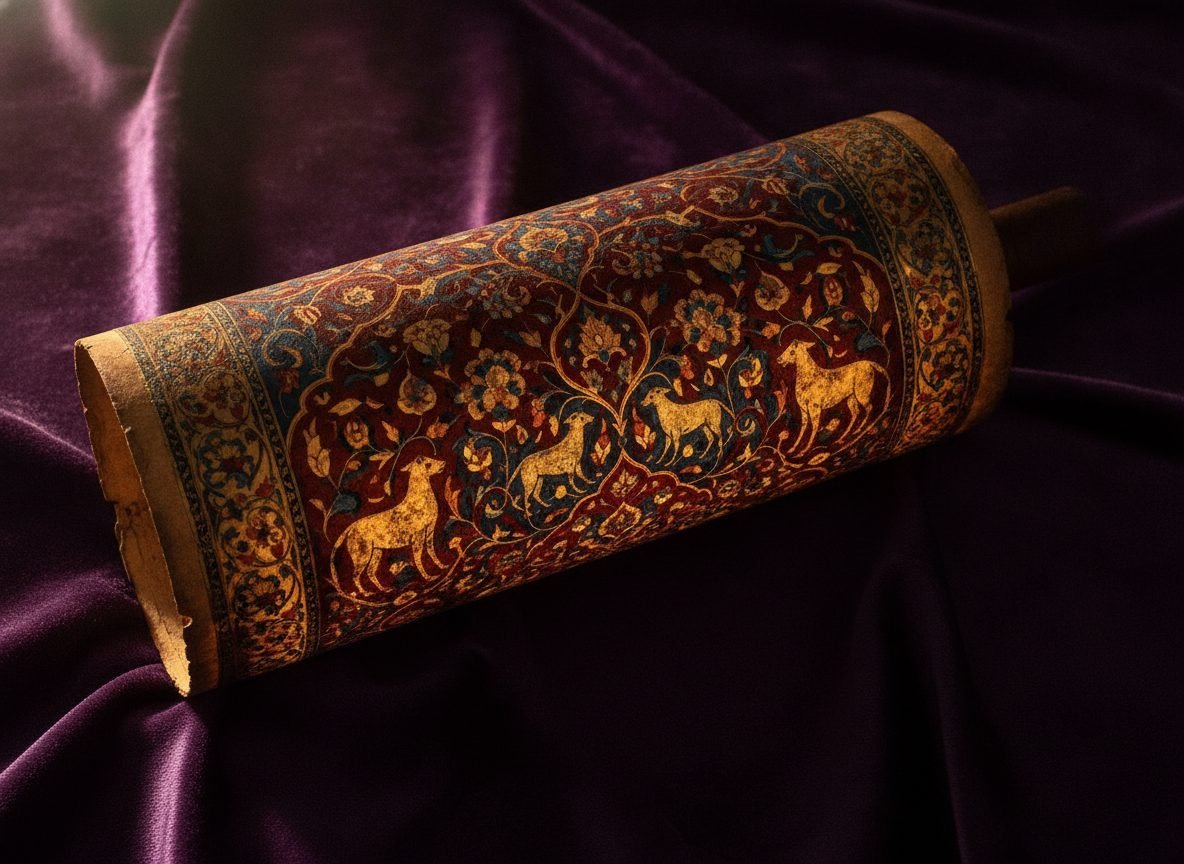
The Scroll of Esther
A miracle hidden in coincidences
Megillat Esther is the scroll read twice on Purim. It tells how a chain of coincidences in the palace of the Persian king became the rescue of an entire people.
- The feast in ShushanAhasuerus, king of Persia, rules 127 provinces from India to Cush and holds a lavish, days-long feast in the capital, Shushan.
- VashtiQueen Vashti refuses to appear at the feast at the king's command and loses her throne. The search for a new queen begins.
- Esther — queenOf all the maidens the king chooses Esther (Hadassah), the ward of her kinsman Mordechai. On his advice she conceals that she is Jewish.
- MordechaiMordechai uncovers a plot by two courtiers against the king. His deed is written in the chronicle — and forgotten for a time.
- Haman and the lotHaman rises to power and demands homage. Mordechai will not bow — and Haman casts the lot (pur), setting the Jews' destruction for the 13th of Adar.
- “Who knows…”Mordechai begs Esther to intercede: “who knows whether you came to the throne for just such an hour.” After a three-day fast she goes to the king uninvited.
- The fall of HamanAt her banquet Esther reveals Haman's plot. The king is enraged — and Haman is hanged on the very gallows he had prepared for Mordechai.
- Rescue and PurimThe Jews are allowed to defend themselves, and they prevail. The 14th of Adar becomes a day of joy, feasting, gifts and mutual support — the festival of Purim.

A hidden miracle
In the entire scroll God's name is never mentioned — here the miracle is hidden in a chain of “coincidences.”